An emerald cut engagement ring has a distinctive look that separates it from the brilliant sparkle of many traditional diamond shapes.
Its elongated rectangular outline, cropped corners and long step-cut facets create a clean, reflective appearance often described as a hall-of-mirrors effect. Instead of producing the busy sparkle associated with brilliant cuts, an emerald-cut diamond emphasizes clarity, symmetry, broad flashes of light and its geometric outline.
That difference makes choosing an emerald cut diamond slightly different from choosing a round or other brilliant-cut stone.
Clarity, color, proportions and the setting deserve particular attention because the diamond's large open facets can make characteristics more visible.
This guide explains what to know before choosing an emerald cut engagement ring, from the diamond itself to settings, styles and buying considerations.
What Is an Emerald Cut Diamond?
An emerald cut is a rectangular or square-shaped diamond with cropped corners and step-cut facets.
The facets are arranged in long, parallel-looking rows that create the stone's distinctive reflective appearance. GIA describes the visual effect as a "hall of mirrors."
Despite the name, an emerald-cut diamond does not mean the diamond is an emerald gemstone.
The cutting style was originally associated with emeralds and was designed to reduce stress on the gemstone during cutting. The style was later adopted for diamonds and became a distinctive diamond shape and cutting style.
Today, emerald cut diamonds are used in engagement rings ranging from minimalist solitaires to elaborate vintage-inspired and three-stone designs.
Emerald Cut vs Other Diamond Shapes
The biggest difference between emerald cut and many other popular engagement ring shapes is the faceting style.
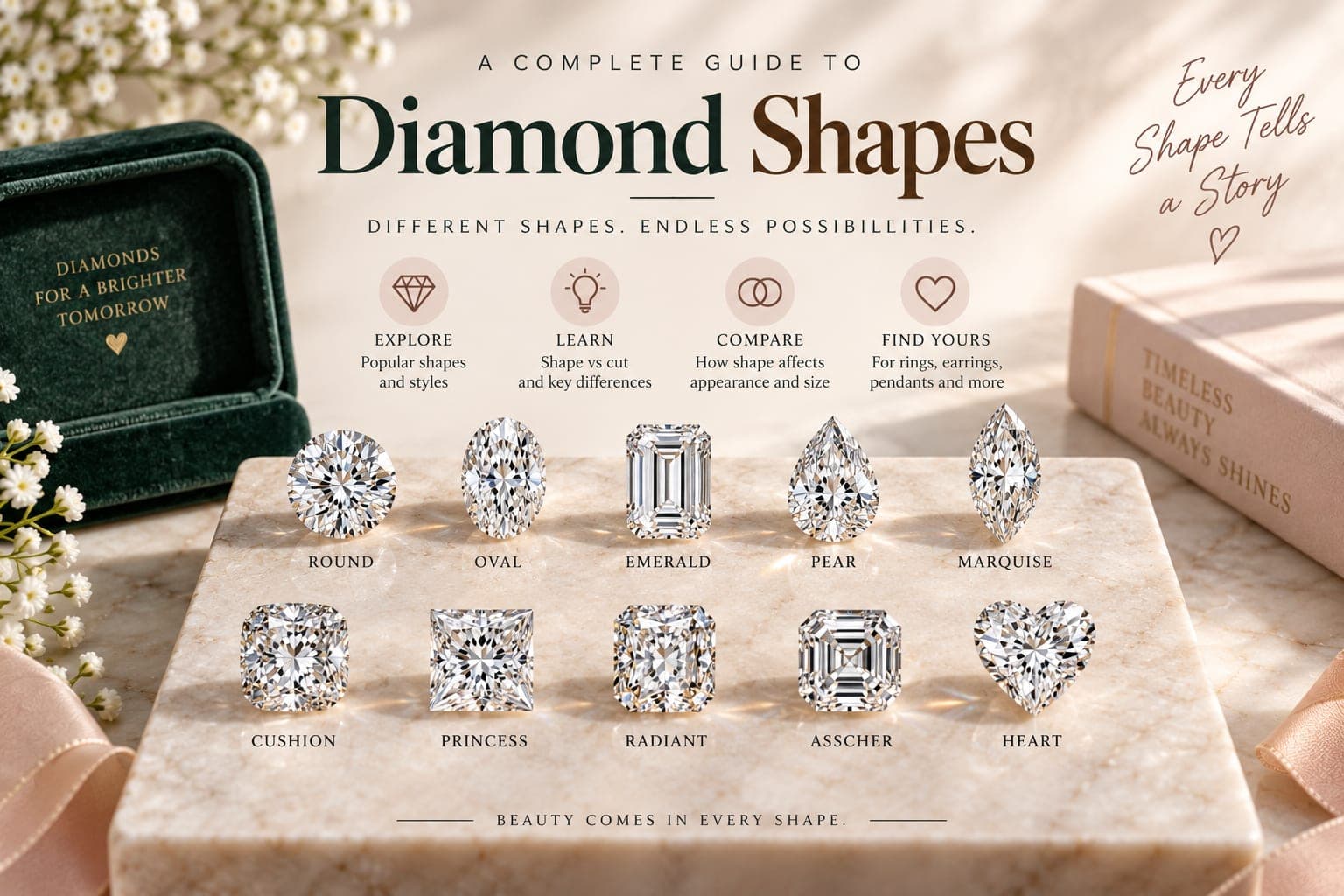
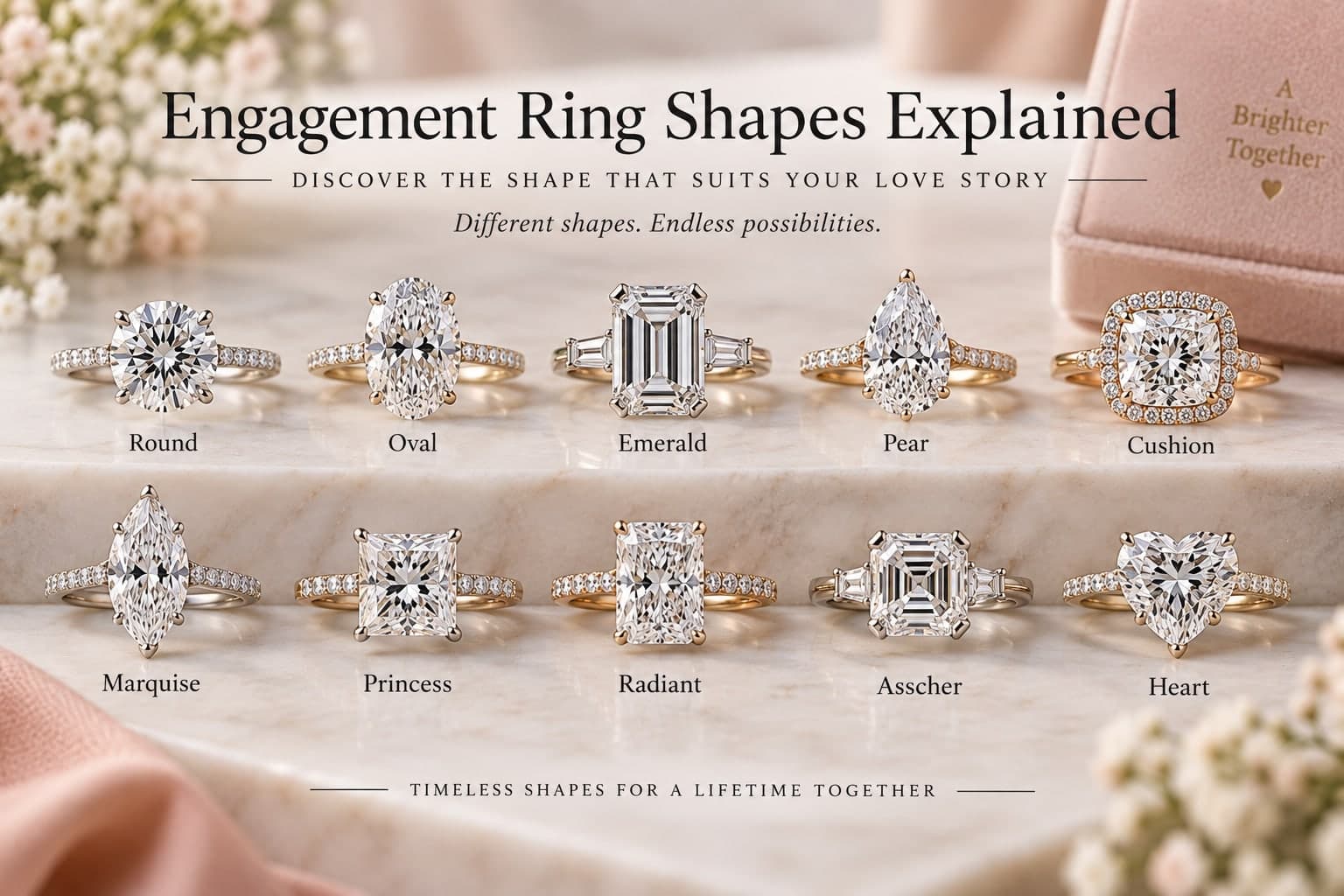
Round, oval, pear and many other popular diamonds commonly use brilliant-style faceting, which creates numerous reflections and strong scintillation.
Emerald cuts use a step-cut design, with larger facets arranged in parallel rows. This produces a more open and reflective appearance.
That doesn't mean one style is universally better.
It simply means they create different visual effects.
Emerald cut
Long rectangular outline
Cropped corners
Step-cut facets
Broad flashes of light
Strong emphasis on clarity and symmetry
Clean geometric appearance
Brilliant-cut shapes
More numerous facets
Stronger scintillation
More complex light pattern
Can disguise some inclusions and color more effectively
Understanding this difference is one of the most important steps when shopping for an emerald cut engagement ring.
Why Emerald Cut Engagement Rings Are Different
Emerald cut diamonds have characteristics that should influence how you shop.
1. The Facets Are Larger
The long step-cut facets create larger reflective surfaces.
This is responsible for the emerald cut's distinctive appearance, but it also means inclusions may be easier to notice than they would be in a more heavily faceted brilliant-cut diamond.
2. Color Can Be More Visible
The same principle applies to color.
Because emerald cuts generally have less scintillation than brilliant cuts, the diamond's body color can be more noticeable. GIA specifically advises paying attention to color when considering an emerald-cut diamond.
3. Symmetry Matters
The emerald cut is highly geometric.
That means the relationship between the corners, facets and overall outline can have a significant effect on its appearance.
When comparing stones, look carefully at the diamond from the top rather than relying only on its grading information.
Emerald Cut Diamond Clarity
Clarity is particularly important when choosing an emerald cut diamond.
Diamond clarity refers to internal characteristics called inclusions and surface characteristics called blemishes.
In an emerald cut, the long open facets can make inclusions easier to see compared with some brilliant-cut diamonds.
That doesn't automatically mean you need the highest clarity grade available.
Instead, look at the actual diamond and consider whether characteristics are visible to the naked eye.
What to look for
When examining an emerald cut diamond, pay attention to:
Visible inclusions
Dark areas
Surface-reaching characteristics
Chips or fractures
Overall transparency
How clean the stone appears face-up
A grading report provides useful standardized information, but viewing the actual diamond is also important.
Emerald Cut Diamond Color
Color is another characteristic worth considering carefully.
GIA notes that step-cut diamonds such as emerald cuts can show body color more readily than brilliant cuts.
The metal surrounding the diamond can also influence how the stone looks.
For example, a white-metal setting may create a different visual impression from yellow or rose gold.
Rather than choosing a color grade based solely on a number, compare diamonds in person or through high-quality imagery when possible.
Emerald Cut Diamond Proportions
Proportions influence the appearance of an emerald cut diamond.
Two emerald-cut diamonds can have the same carat weight while looking noticeably different because their length, width and depth proportions differ.
Some emerald cuts are relatively square, while others are noticeably elongated.
Common considerations include:
Length-to-width ratio
Table size
Depth
Symmetry
Corner shape
Facet alignment
There isn't one universal proportion that makes every emerald cut ideal.
Personal preference plays a role.
Some shoppers prefer a long, narrow outline, while others prefer a wider rectangular or nearly square appearance.
How Big Does an Emerald Cut Diamond Look?
Carat weight measures a diamond's weight, not simply how large it looks from above.
Because emerald cuts have a broad, elongated outline, their face-up appearance can vary considerably depending on their proportions.
A two-carat emerald cut with one set of proportions may look very different from another two-carat stone.
That's why it's useful to compare the diamond's actual measurements rather than looking at carat weight alone.
When shopping online, look for the diamond's:
Length
Width
Depth
Carat weight
Length-to-width ratio
This gives you a much better idea of its physical dimensions.
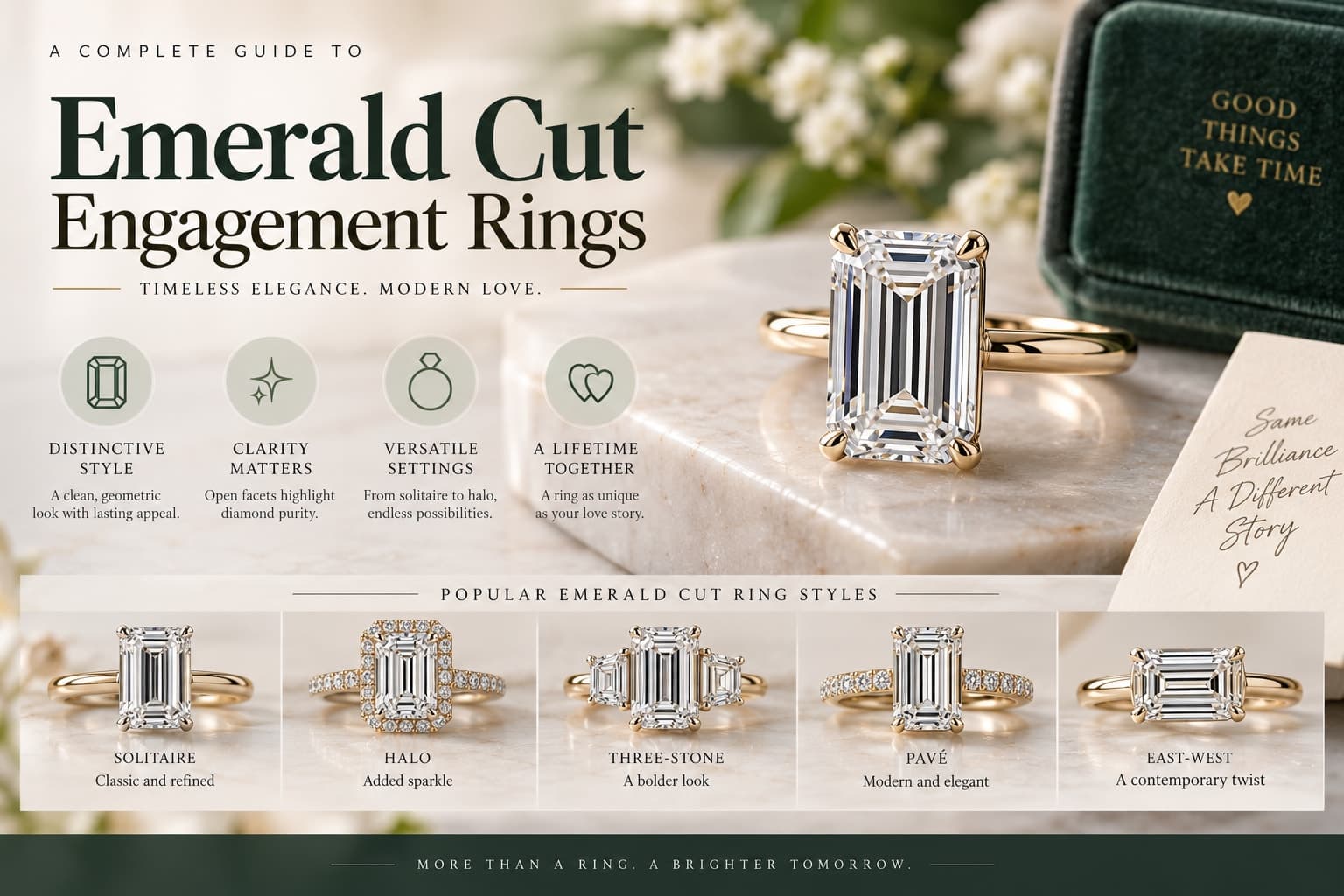
Popular Emerald Cut Engagement Ring Settings
The emerald cut's geometric shape works with many different engagement ring settings.
Solitaire Emerald Cut Ring
A solitaire places the emerald cut diamond at the center without a surrounding halo.
This keeps attention on the diamond's rectangular outline and step-cut pattern.
A solitaire can be particularly effective if you prefer a clean, understated design.
Halo Emerald Cut Ring
A halo surrounds the center emerald-cut diamond with smaller diamonds.
This adds additional sparkle around the center stone and creates a more decorative appearance.
Halo designs can also be customized with different shapes of accent diamonds.
Three-Stone Emerald Cut Ring
A three-stone design places additional gemstones beside the center diamond.
The side stones can be smaller emerald cuts or contrasting shapes such as trapezoids or other diamond cuts.
This gives the ring a broader appearance across the finger.
Pavé Emerald Cut Ring
A pavé band contains many small diamonds set closely along the shank.
Combining pavé with an emerald-cut center creates a contrast between the geometric center stone and the continuous sparkle of the band.
Bezel Emerald Cut Ring
A bezel setting surrounds the edge of the diamond with metal.
This creates a clean outline around the emerald cut and can give the ring a more contemporary appearance.
East-West Emerald Cut Ring
An east-west setting places the elongated emerald cut horizontally rather than vertically.
This changes the traditional orientation of the diamond and gives the ring a more unconventional appearance.
GIA specifically notes that emerald-cut diamonds can be set horizontally as an east-west design.
Emerald Cut Engagement Ring Styles
The emerald cut isn't limited to one particular aesthetic.
It can be incorporated into several broader engagement ring styles.
Classic
A simple emerald-cut solitaire with a plain metal band creates a restrained, traditional appearance.
Modern
A sleek bezel, east-west orientation or minimalist band can give an emerald cut a contemporary look.
Vintage Inspired
Emerald cuts pair naturally with Art Deco-inspired designs because of their strong geometry and symmetry.
Vintage-inspired rings may include:
Milgrain
Filigree
Geometric details
Pavé diamonds
Decorative shoulders
Three-Stone
A three-stone emerald-cut ring can create a more substantial appearance while keeping the center diamond as the focal point.
This is where your previously published Engagement Ring Styles Explained article can provide broader context.
Emerald Cut Engagement Rings With Different Metals
The metal you choose changes the overall appearance of the ring.
Platinum
Platinum provides a naturally white appearance and is commonly used in fine jewelry.
Its neutral color can allow an emerald-cut diamond to remain the main visual focus.
White Gold
White gold also creates a white-metal appearance and can work well with minimalist or modern emerald-cut designs.
Yellow Gold
Yellow gold creates a warmer contrast with the diamond.
A yellow-gold emerald-cut engagement ring can combine the geometric structure of the diamond with a more traditional metal appearance.
Rose Gold
Rose gold introduces a pinkish warmth.
It can create a softer contrast against the sharp geometry of an emerald-cut diamond.
The choice ultimately depends on the look you prefer and the jewelry the wearer already owns.
How to Choose an Emerald Cut Engagement Ring
Choosing an emerald cut ring becomes easier if you approach it step by step.
Step 1: Set Your Budget
Decide what you're comfortable spending before comparing diamonds.
Your budget will influence the combination of carat weight, color, clarity, setting and metal you can consider.
Step 2: Choose the Length and Width
Look at different emerald-cut proportions.
Do you prefer:
A shorter, wider rectangle?
A long, narrow rectangle?
A shape closer to square?
There is no single correct choice.
Step 3: Examine Clarity Carefully
Because the facets are large and open, examine the diamond for visible inclusions.
Don't rely exclusively on the clarity grade.
Look at the actual stone whenever possible.
Step 4: Compare Color
Compare emerald-cut diamonds side by side if possible.
The same color grade can look different depending on the setting, lighting and individual stone.
Step 5: Check Symmetry
Look carefully at:
Corners
Facet alignment
Outline
Centering
Overall proportions
A geometric diamond makes symmetry especially noticeable.
Step 6: Choose the Setting
Decide whether you prefer:
Solitaire
Halo
Three-stone
Pavé
Bezel
East-west
Your setting should complement the diamond rather than compete with it.
Step 7: Consider the Wedding Band
Think about how the engagement ring will sit beside a wedding band.
Some raised settings allow a wedding band to sit more closely against the engagement ring, while other designs may leave a gap.
Try the two rings together when possible.
Emerald Cut vs Radiant Cut
Emerald and radiant cuts can look similar at first because both can have rectangular outlines.
The major difference is the faceting style.
Emerald cut
Step cut
Long, open facets
Reflective appearance
More emphasis on clarity and symmetry
Less scintillation than brilliant cuts
Radiant cut
Brilliant-style faceting
More numerous facets
More active sparkle
Cropped corners
Can be square or elongated
GIA identifies emerald as a step cut and radiant as a brilliant-style cut despite their potentially similar rectangular outlines.
If you're deciding between the two, compare actual stones rather than relying only on photographs.
Emerald Cut vs Asscher Cut
Both emerald and Asscher cuts use step-cut faceting.
The major visual difference is generally their outline.
Emerald cut: usually rectangular and elongated.
Asscher cut: generally square with cropped corners.
Both can produce the reflective "hall-of-mirrors" appearance associated with step cuts.
Your choice may ultimately come down to whether you prefer a rectangular or square outline.
Are Emerald Cut Engagement Rings a Good Choice for Everyday Wear?
An emerald-cut diamond can certainly be used in an engagement ring intended for everyday wear, but the ring should be properly designed and maintained.
Pay attention to:
Secure setting
Diamond condition
Prong condition where applicable
Ring fit
Possible exposure to impact
Regular professional inspections
The diamond itself is durable, but the shape, setting and individual stone characteristics still matter.
GIA advises considering durability and checking for features such as chips or fractures that could make a diamond more vulnerable.
How to Inspect an Emerald Cut Diamond
When comparing emerald-cut diamonds, don't look at them under only one type of lighting.
GIA recommends viewing diamonds under different lighting conditions because lighting can dramatically change how a diamond's brilliance and fire appear.
If shopping online, look for:
High-resolution photographs
Video
360-degree views
Grading information
Measurements
Clear return policies
If possible, view the diamond under natural daylight as well as indoor lighting.
Pay particular attention to whether the center looks bright and balanced rather than focusing only on sparkle.
Should You Buy a Natural or Laboratory-Grown Emerald Cut Diamond?
Emerald-cut diamonds are available as both natural and laboratory-grown diamonds.
Laboratory-grown diamonds have essentially the same chemical, physical and optical properties as natural diamonds, but their origins are different.
If you're comparing the two, make sure the listing clearly identifies the diamond's origin and provides appropriate documentation.
The important comparison points include:
Origin
Carat weight
Color
Clarity
Cut characteristics
Measurements
Grading documentation
Price
Return policy
Don't assume that two diamonds are equivalent simply because their shape and carat weight are identical.
Emerald Cut Engagement Ring Buying Checklist
Before buying, check each of these:
☐ Set your budget
☐ Decide on natural or laboratory-grown
☐ Choose your preferred length-to-width ratio
☐ Compare color
☐ Examine clarity
☐ Check symmetry
☐ Review the diamond's measurements
☐ Check the grading report
☐ Choose a setting
☐ Choose the metal
☐ Consider the wedding band
☐ Inspect the diamond under different lighting
☐ Review the seller's return policy
☐ Check warranty and maintenance options
Frequently Asked Questions
What is an emerald cut engagement ring?
An emerald cut engagement ring features a diamond with a rectangular or square outline, cropped corners and step-cut facets arranged in long, parallel rows.
Are emerald cut diamonds sparkly?
Emerald cuts have a different type of light performance from brilliant-cut diamonds. Their large step facets create broad reflections and a hall-of-mirrors appearance rather than the intense scintillation commonly associated with brilliant cuts.
Is clarity important for an emerald cut diamond?
Yes. Emerald-cut diamonds have large open facets that can make inclusions easier to see, so examining clarity carefully is particularly important.
Does color matter for emerald cut diamonds?
Yes. The step-cut faceting can make body color more noticeable than it may be in some brilliant-cut diamonds.
What setting looks good with an emerald cut diamond?
Emerald cuts can work with solitaire, halo, three-stone, pavé, bezel and east-west settings. The best choice depends on the overall design and the look you want.
Can an emerald cut diamond be set horizontally?
Yes. A horizontally oriented emerald-cut diamond is commonly called an east-west setting. GIA specifically identifies this as an option for emerald-cut engagement rings.
Is an emerald cut the same as an emerald gemstone?
No. An emerald-cut diamond is still a diamond. The term refers to its shape and step-cut faceting style, which was originally associated with cutting emerald gemstones.
What is the difference between emerald cut and radiant cut?
Both can have rectangular outlines, but emerald is a step cut with large, open facets, while radiant uses brilliant-style faceting and generally produces more scintillation.
Final Thoughts
Emerald cut engagement rings have a distinctive combination of geometry, symmetry and understated light play.
The rectangular outline and step-cut facets create a very different appearance from round and other brilliant-cut diamonds.
When choosing one, pay particular attention to clarity, color, proportions and symmetry, because the emerald cut's larger facets can make these characteristics more noticeable.
Then consider the setting, metal and overall ring design.
Whether you choose a simple solitaire, a vintage-inspired ring, a three-stone design or a modern east-west setting, the emerald cut gives you plenty of room to create a distinctive engagement ring.