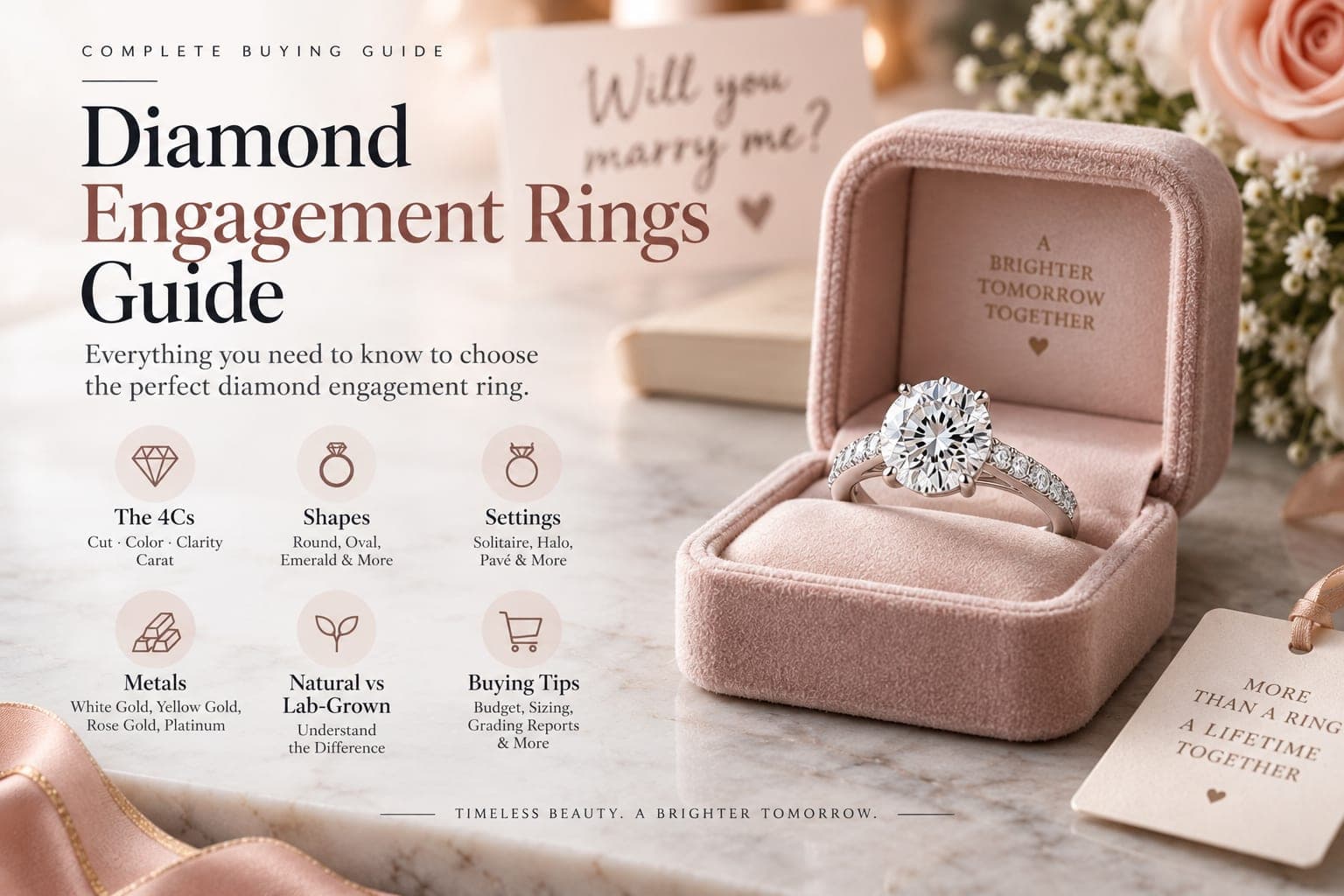
Choosing an engagement ring involves more than selecting a beautiful diamond. The engagement ring setting determines how the center stone and other gemstones are held in place, how much of the stone is visible, and how the ring looks from different angles.
From classic prong settings to sleek bezels, sparkling pavé bands and elegant cathedral designs, there are many ways to build an engagement ring.
Understanding the different types of engagement ring settings can make it easier to compare designs and find a ring that fits your preferred look, lifestyle and everyday needs.
What Is an Engagement Ring Setting?
An engagement ring setting is the part of the ring that holds and positions the gemstone or diamond.
In technical jewelry terminology, a setting can describe the method used to secure a gemstone, such as prongs, a bezel or a channel. The word is also commonly used more broadly to describe the structure and arrangement of stones in an engagement ring.
For example, a prong setting uses small metal claws to hold a diamond, while a bezel setting surrounds the stone with a metal rim.
This is different from an engagement ring's overall style.
Think of it this way:
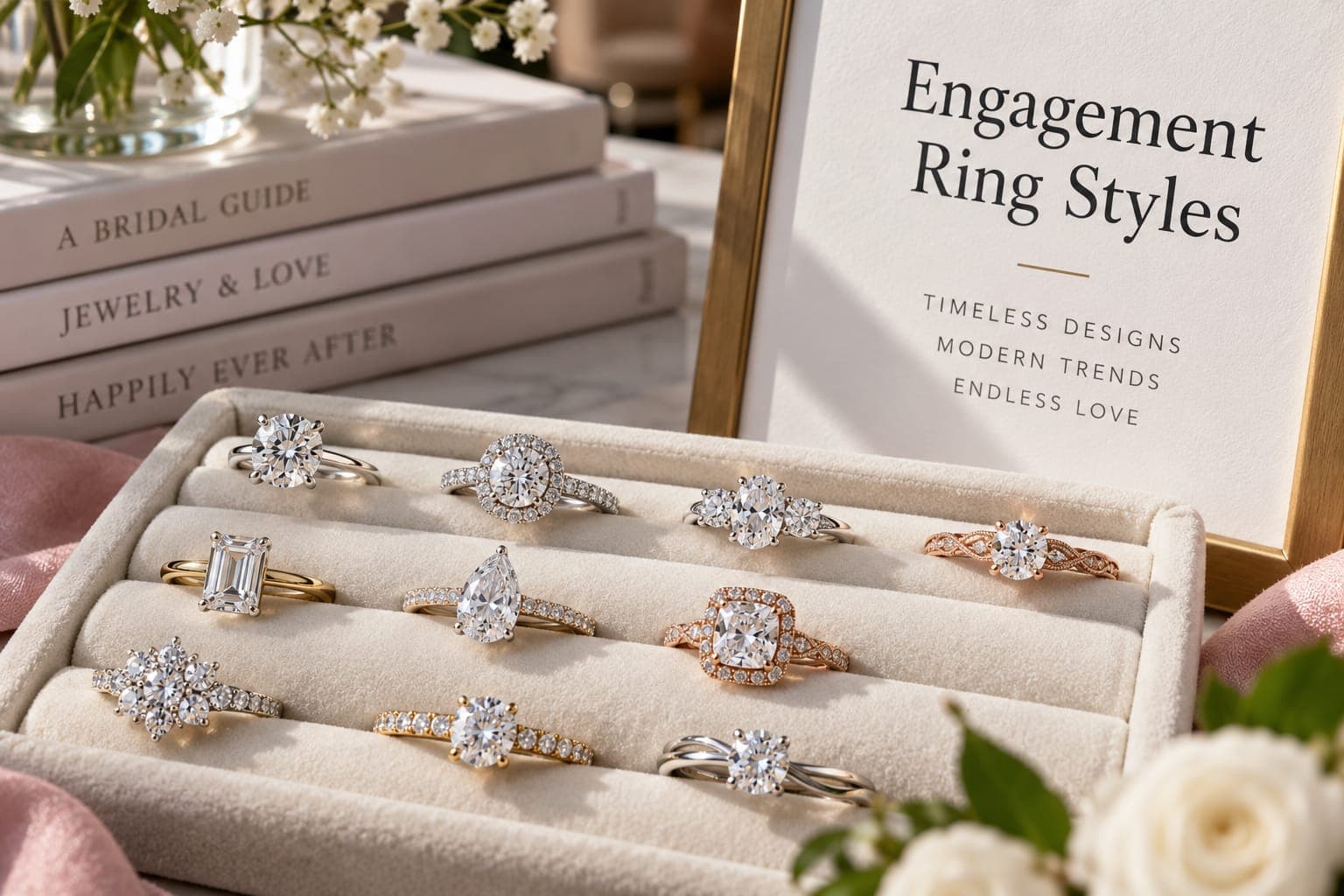
Style describes the overall design aesthetic.
Setting describes how the stone is secured or arranged.
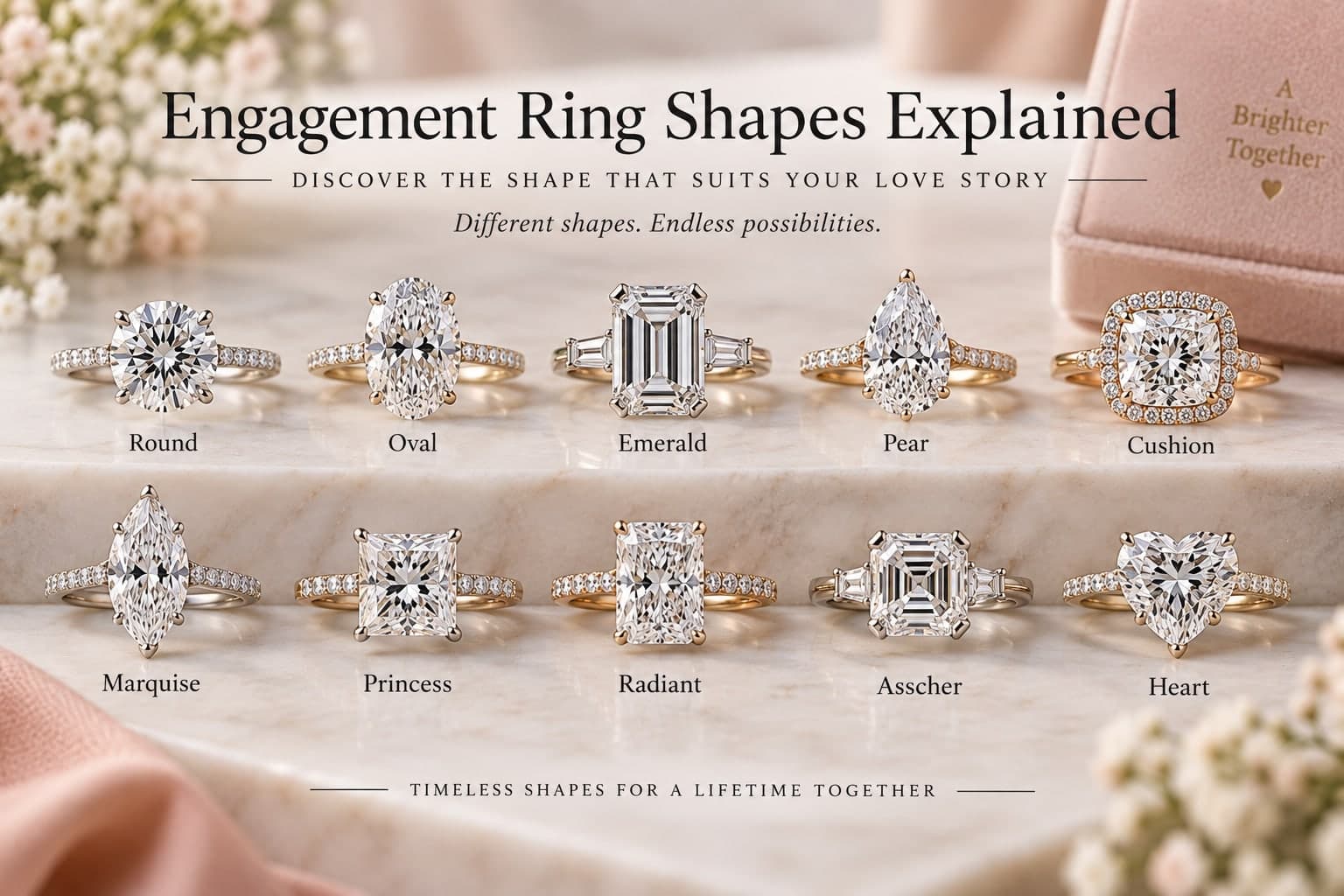
Shape describes the outline of the diamond, such as round, oval or emerald.
Metal refers to the material used for the ring, such as platinum, yellow gold or white gold.
These elements can be combined in many different ways.
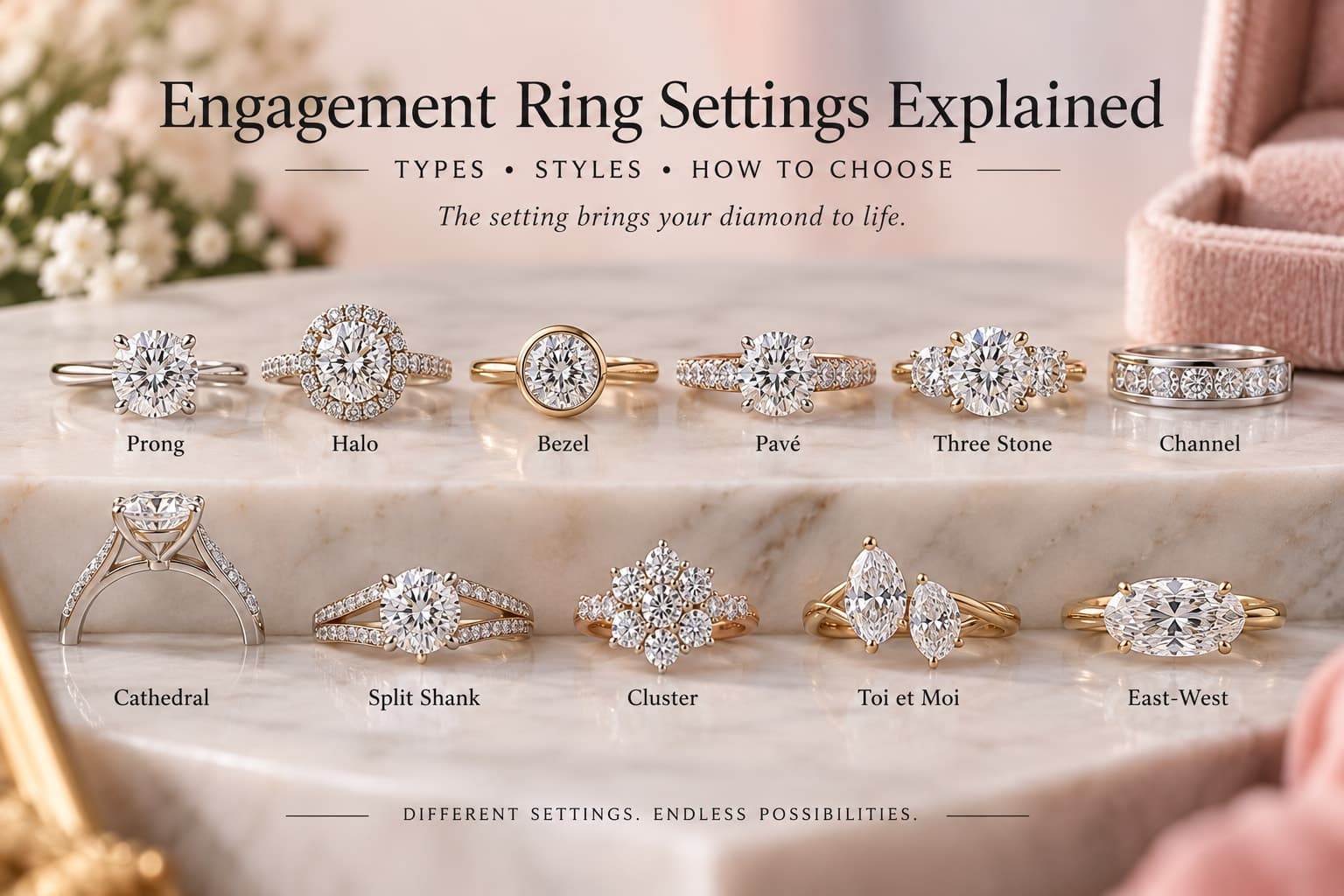
Popular Types of Engagement Ring Settings
There isn't one setting that works for every ring. Some designs emphasize the center stone, while others add extra diamonds or provide more coverage around the gemstone.
Here are some of the most common engagement ring settings to know.
1. Prong Setting
A prong setting uses small metal claws to hold the diamond securely around its girdle.
Four- and six-prong designs are common, although the number and arrangement can vary. Because relatively little metal covers the center stone, prong settings leave much of the diamond exposed.
This makes the prong setting a popular foundation for classic engagement rings.
It can also be paired with different diamond shapes, including round, oval, cushion, pear and other fancy shapes.
Why choose a prong setting?
A prong setting may appeal to someone who wants:
The center diamond to remain the main focus
An open appearance
A traditional engagement ring design
A setting that works with many diamond shapes
One important consideration is maintenance. Prongs are small components that can wear or become damaged, so regular professional inspections can help identify problems before a stone becomes loose.
2. Solitaire Setting
A solitaire setting features one main center gemstone without a surrounding halo or group of side stones.
It is one of the most recognizable engagement ring designs and can be combined with a prong setting, bezel or other structural details.
The simplicity of a solitaire puts attention on the center diamond's shape, cut and proportions.
A round diamond is a traditional choice, but solitaire designs can also work with oval, pear, emerald, cushion, marquise, radiant and other shapes.
Best suited to: people who prefer a clean design where the center stone remains the focal point.
3. Halo Setting
A halo setting places smaller diamonds or gemstones around the center stone.
The surrounding stones create a frame around the center diamond and add additional sparkle. Depending on the design, a halo can be made with one row of stones or multiple rows.
Some rings also use a hidden halo, where the accent diamonds sit beneath the center stone rather than forming a visible circle from the top.
Halo settings can be particularly useful when you want the ring to have a more elaborate appearance without changing the center diamond.
4. Bezel Setting
A bezel setting surrounds the edge of the gemstone with a continuous rim of metal.
Instead of using individual prongs, the metal surrounds the stone's perimeter. This gives the ring a distinctive appearance while providing additional coverage around the gemstone.
Because the stone is surrounded by metal, bezel settings are often considered when protection and a lower-profile design are priorities.
The trade-off is that more metal surrounds the gemstone compared with an open prong setting.
Best suited to: people who like a sleek appearance and want more metal surrounding the stone.
5. Pavé Setting
The word pavé comes from the French word for "paved."
In a pavé setting, small diamonds are positioned closely together along part of the band or another area of the ring. Tiny metal beads or prongs secure the stones while minimizing the visible metal between them.
The result is a band with a continuous-looking line of sparkle.
Pavé can be combined with many different engagement ring designs, including solitaire, halo and vintage-inspired rings.
6. Channel Setting
A channel setting places gemstones inside a groove between two parallel walls of metal.
The stones sit within the channel rather than being individually surrounded by visible prongs. This creates a smooth row of gemstones along the band.
Channel settings are often used for accent diamonds and wedding bands, but they can also appear as part of an engagement ring design.
Best suited to: people who like a clean band with a continuous row of gemstones.
7. Cathedral Setting
A cathedral setting uses raised arches of metal that curve upward from the shank toward the center stone.
The structure elevates the gemstone and gives the ring a more pronounced profile. The name comes from the architectural appearance of the arches.
Cathedral settings can be simple or decorated with pavé diamonds, vintage details or other design elements.
This means a cathedral setting isn't necessarily a separate aesthetic style—it can be incorporated into several different ring designs.
8. Three-Stone Setting
A three-stone setting features a center gemstone accompanied by two additional stones on either side.
The side stones can match the center stone or use different shapes, sizes or colors.
Three-stone rings can therefore range from traditional and symmetrical to more customized designs.
The arrangement is also commonly associated with the symbolism of the past, present and future, although many people simply choose the design because they like its balanced appearance.
9. Cluster Setting
A cluster setting groups several gemstones closely together to create one larger visual composition.
Instead of relying on one large center stone, the design uses multiple stones arranged around a central area. Cluster designs can be round, floral, geometric or highly decorative.
This type of setting can also contribute to a vintage-inspired appearance. Brilliant Earth's current vintage guide, for example, notes that clusters can be arranged in floral or geometric patterns associated with older jewelry designs.
10. Split Shank Setting
A split shank design has a band that divides into two or more sections as it approaches the center stone.
The open space created by the split can frame the center gemstone and give the ring additional visual detail.
The divided sections can remain plain or be decorated with diamonds, including pavé.
Split shank designs can therefore look very different depending on the center stone, metal and additional details.
11. East-West Setting
An east-west setting changes the orientation of an elongated gemstone.
Instead of placing an oval or emerald-cut stone vertically along the finger, the stone is positioned horizontally.
This creates a more unexpected and contemporary appearance while using a familiar diamond shape. Blue Nile's current engagement-ring coverage identifies east-west designs as one of the modern setting options available to shoppers.
12. Toi et Moi Setting
A toi et moi design features two gemstones positioned beside one another.
The name means "you and me," and the two-stone arrangement has long been associated with romantic symbolism.
The two stones don't necessarily need to match. Different shapes, colors and sizes can be combined to create a more personalized ring.
This makes toi et moi rings particularly distinctive compared with traditional single-stone designs.
Engagement Ring Setting vs Style vs Diamond Shape
These terms are easy to confuse, especially when shopping for an engagement ring.
TermWhat it describesExampleSettingHow the gemstone is secured or arrangedProng, bezel, pavéRing styleOverall design aestheticClassic, vintage, modernDiamond shapeOutline of the diamondRound, oval, emeraldMetalMaterial of the ringPlatinum, yellow goldAccent stonesAdditional gemstonesSide diamonds, halo
For example, one ring could have a modern style, an emerald-cut diamond, a prong setting, and a white-gold band.
This is why two rings can have completely different appearances even when they use the same type of setting.
How to Choose an Engagement Ring Setting
Choosing a setting becomes easier when you look beyond appearance.
Consider the Center Stone
Different settings interact differently with different diamond shapes.
A solitaire can showcase a single stone, while a halo creates a surrounding frame. An east-west design can change the appearance of an elongated diamond by rotating its orientation.
Think about the diamond shape and how prominently you want it displayed.
Think About Everyday Wear
An engagement ring is usually worn frequently, so consider how the ring fits into everyday activities.
A higher-profile design may have a different practical experience from a lower-profile design. A bezel, for example, surrounds more of the stone with metal, while an open prong design exposes more of the gemstone.
Consider How Much Sparkle You Want
If you want the center stone to dominate the design, a solitaire may be appealing.
If you want additional sparkle across the ring, pavé, halo or other accent-stone designs can create a more detailed appearance.
Think About the Wedding Band
The engagement ring should also work with the wedding band you may eventually wear beside it.
The height, shape and design of the engagement ring can affect how the two rings sit together.
Match the Setting to Your Personal Taste
There is no requirement to choose the most traditional setting.
Some people prefer a simple solitaire, while others may prefer a vintage-inspired cluster, a modern bezel or a distinctive toi et moi design.
The right choice depends on the combination of appearance, practical needs and personal preference.
Which Engagement Ring Setting Is Right for You?
Here's a simple way to compare some popular choices:
SettingGeneral LookMain CharacteristicProngClassic and openSmall metal claws secure the stoneSolitaireSimple and timelessOne main center stoneHaloGlamorousSmaller stones surround the centerBezelSleek and modernMetal surrounds the stonePavéSparklingSmall diamonds closely cover part of the bandChannelClean and continuousStones sit between metal wallsCathedralElevated and elegantArched shoulders raise the center stoneThree-StoneBalanced and meaningfulCenter stone with two side stonesClusterDetailed and distinctiveMultiple stones grouped togetherSplit ShankArchitecturalBand divides toward the centerEast-WestContemporaryElongated stone sits horizontallyToi et MoiRomantic and distinctiveTwo gemstones sit together
Remember that these categories can overlap. A ring might combine a three-stone arrangement with prongs, or a solitaire center with a pavé band.
Engagement Ring Settings and Ring Styles Are Not the Same
One of the most important things to understand when researching engagement rings is that setting and style aren't always interchangeable terms.
For example, "vintage" describes an aesthetic direction, while "bezel" describes a method of securing the gemstone.
A vintage-inspired engagement ring could therefore use a bezel setting, a halo, a cluster arrangement or a solitaire design.
Similarly, a modern engagement ring could use a bezel, prongs, an east-west orientation or another setting technique.
Understanding this distinction will make it much easier to compare rings and communicate what you want when speaking with a jeweler.
Frequently Asked Questions
What is the most common engagement ring setting?
Prong settings are among the most common engagement ring settings. They use small metal arms to secure the center stone while leaving much of it exposed.
What is the difference between a setting and a style?
A setting generally describes how a gemstone is mounted or arranged, while style describes the broader design aesthetic. However, jewelry retailers sometimes use the terms more broadly or interchangeably.
Is a bezel setting more protective?
A bezel surrounds the gemstone's edge with metal, providing more coverage than an open prong design. The amount of protection depends on the specific ring construction and gemstone.
What is a pavé engagement ring?
A pavé setting places small diamonds closely together along part of the ring, creating the appearance of a continuous sparkling surface.
Can an engagement ring have more than one setting type?
Yes. Engagement rings can combine different construction and design elements. For example, a ring might have a prong-set center stone with a pavé band or a cathedral structure.
Which engagement ring setting should I choose?
Consider the center stone, desired appearance, everyday wear, level of sparkle, wedding-band compatibility and personal taste. There isn't one setting that is appropriate for everyone.
Final Thoughts
Engagement ring settings provide the foundation for how a ring holds and presents its gemstones.
From prong and bezel settings to halo, pavé, cathedral and three-stone designs, each option creates a different combination of appearance and construction.
The key is to understand how the setting works alongside the diamond shape, ring style, metal and other design details.
Once you understand those differences, comparing engagement rings becomes much less confusing—and you can focus on finding a design that genuinely fits the person who will wear it.